
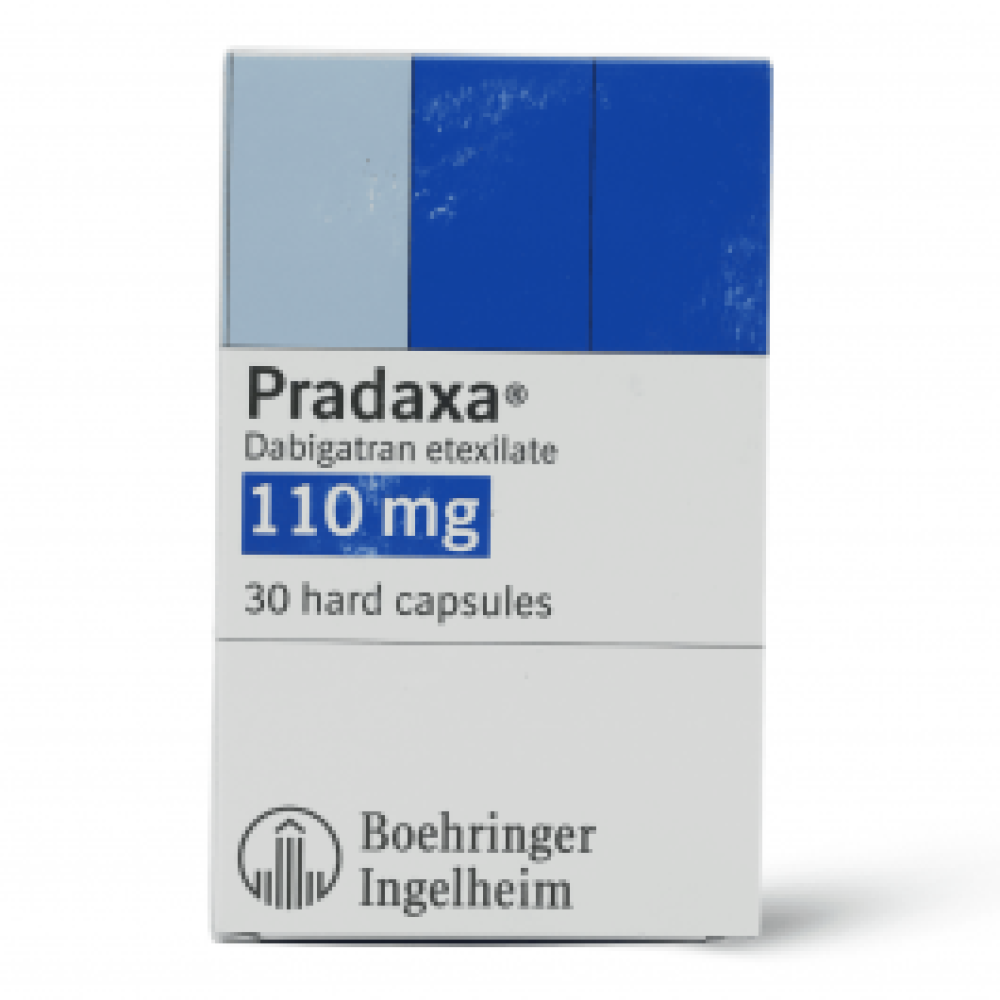
Paradexa 110 mg 30 capsules

Dabigatran 110 mg capsules
Why is dabigatran used?
The active ingredient dabigatran belongs to a group of medicines called anticoagulants. It works by blocking a substance in the body that is involved in the formation of blood clots.
Do not use dabigatran
Do not use dabigatran
• If you are allergic to dabigatran or any of the other ingredients of this medicine
• If you suffer from severe kidney dysfunction
• If you are currently bleeding
• If you have a disease in one of your body organs that increases the risk of serious bleeding (such as a stomach ulcer, injury or bleeding in the brain, or recent brain or eye surgery)
• If you have an increased tendency to bleed. This may be congenital, due to an unknown cause, or due to other medications.
• If you are taking medications to prevent blood clots (such as warfarin, rivaroxaban, apixaban, or heparin), except when changing your anticoagulant therapy, while you have an intravenous or arterial line and are receiving heparin through that line to keep it open, or while your heartbeat is being restored to normal through a procedure called catheter ablation for atrial fibrillation
• If you suffer from severe liver dysfunction or liver disease that can cause death
• If you are taking ketoconazole or itraconazole orally, medications for treating fungal infections
• If you are taking cyclosporine orally, a drug to prevent organ rejection after transplantation
• If you are taking Dronedarone, a medicine used to treat abnormal heart rhythms
• If you are taking a combination product of glicaprevir and piperantasvir, an antiviral drug used to treat hepatitis C
• If you have received an artificial heart valve that requires constant blood thinning
Precautions and warnings
Tell your doctor if you have any medical conditions or illnesses, especially any of them
Those listed below:
• If you have an increased risk of bleeding, such as:
If you have recently bled
If you have had a surgical tissue removal (biopsy) in the past month
If you have a serious injury
If you suffer from esophagitis or gastritis
If you suffer from problems with acid reflux into the esophagus
If you are taking medications that can increase the risk of bleeding
o If you are taking anti-inflammatory drugs such as diclofenac, ibuprofen, piroxicam.
o If you are suffering from inflammation of the heart (bacterial endocarditis)
If you know you have impaired kidney function, or that you are dehydrated (symptoms include feeling thirsty and producing low amounts of dark-colored (concentrated) urine)
If you are over 75 years old
If you weigh 50 kg or less
• If you have had a heart attack or if you have been diagnosed with conditions that increase the risk of heart attack.
Risk of having a heart attack.
• If you have liver disease associated with changes in blood tests, dabigatran is not recommended.
Possible side effects
Stop using the product and seek immediate medical attention if you experience throat tightness, swelling of the eyes, face, lips, or tongue, feel faint, or have difficulty breathing. Stop using the product if you experience hives or itching on your face or body.
Other medications: dabigatran
Tell your doctor or pharmacist if you are taking, have recently taken, or might take any other medication.
Medications. In particular, you should tell your doctor before taking dabigatran, if you are taking it.
Some of the medications listed below:
• Medications to reduce blood clotting (such as warfarin, fenprocoumon, acenocoumarol, heparin, clopidogrel, prasugrel, ticagrelor, rivaroxaban, acetylsalicylic acid)
• Medications used to treat fungal infections (such as ketoconazole, itraconazole), unless applied only to the skin
• Medications used to treat abnormal heart rhythms (such as amiodarone, dronedarone, quinidine, verapamil). If you are taking medications containing verapamil, your doctor will advise you to use a lower dose of dabigatran.
• Medications that prevent organ rejection after transplantation (such as tacrolimus and cyclosporine)
• A product containing glicaprevir and piperantasvir (an antiviral drug used to treat hepatitis C)
• Anti-inflammatory drugs and painkillers (such as acetylsalicylic acid, ibuprofen, diclofenac)
• St. John's wort, an herbal remedy for depression
• Antidepressant medications called selective serotonin reuptake inhibitors (SSRIs) or serotonin-norepinephrine reuptake inhibitors (SNRIs)
• Rifampicin or clarithromycin (two antibiotics)
• Antiviral drugs to combat AIDS (such as ritonavir)
• Certain medications for treating epilepsy (such as carbamazepine, phenytoin)
How to use Dabigatran
• Prevention of blood clot formation after knee or hip replacement surgery: The recommended dose is 220 mg once a day (two 110 mg capsules).
• Prevention of cerebral or vascular blockage due to blood clots that develop after abnormal heartbeats and treatment of blood clots in the veins of the legs and lungs, including prevention of recurrent blood clots in the veins of the legs and lungs: The recommended dose is 300 mg, taken as one 150 mg capsule twice a day.
How to store dabigatran
Keep this medicine out of the sight and reach of children.
Do not use this medicine after the expiry date printed on the carton, label, or bottle after 'EXP'. The expiry date refers to the last day of that month.
* The dosage form and method of administration of Dabigatran 110 mg must be determined according to the therapeutic indication and severity of the disease for each individual patient.